

INTRODUCTION TO COTTON FIBER IN THE GLOBAL MARKET
Cotton remains the cornerstone of the textile and apparel industry, with a long legacy as the world’s most popular natural fiber.
The sale of wholesale cotton fiber bales accounts for more than one-third of all fibers used in textiles globally, sustaining millions of farmers, traders, and manufacturers.
As demand for sustainable, breathable, and renewable materials grows, wholesale cotton fiber remains essential for textile mills and fabric converters.
Bulk trade in cotton fiber connects growers, ginners, exporters, and mills in a complex but efficient global supply chain.
COTTON FIBER TYPES AND GRADES
Cotton fiber quality varies depending on staple length, fineness, maturity, and region of cultivation.
Long-staple and extra-long-staple cottons, such as Egyptian and Pima varieties, are prized for luxury fabrics and fine yarns.
Medium and short-staple cottons are widely used for denim, knitwear, and industrial textiles.
Wholesale suppliers categorize bales by fiber length, micronaire value, strength, and contamination level to meet buyer specifications.
Purchasing wholesale cotton fiber bales allows mills to secure consistent grades and predictable spinning performance across production runs.
COTTON FIBER BALES FOR SALE — PACKAGING AND SPECIFICATIONS
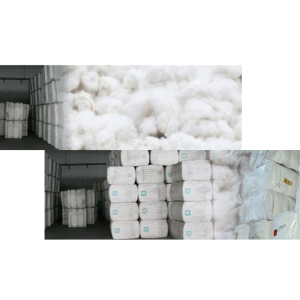
Cotton fiber is compressed into dense bales weighing typically between 160 kg and 220 kg, optimized for containerized shipment.
Bulk exporters supply cotton bales in standard sizes with clear labeling, moisture protection, and traceability tags.
Each bale contains uniform fiber class, minimizing variation during spinning or blending.
For wholesale buyers, detailed bale specifications — length uniformity, color grade, trash content — determine suitability for weaving, knitting, or composite applications.
Export-ready cotton bales include documentation such as bale press certificates, origin certification, and phytosanitary inspection where required.
GLOBAL SUPPLY CHAINS AND LEADING EXPORT REGIONS
The cotton export landscape is anchored by major producers including India, the United States, Brazil, Pakistan, and West African nations.
Seasonal fluctuations and trade agreements shape pricing, availability, and shipment lead times of wholesale cotton fiber bales across these markets.
Wholesale cotton suppliers coordinate with shipping companies, inland transporters, and ginning plants to ensure consistent delivery for bulk buyers.
Regional hubs such as Gujarat, Texas, and Benin remain vital for processing and container consolidation before export.
Emerging producers in Africa and Latin America are expanding supply capacity with competitive fiber grades and sustainable certifications.
QUALITY CONTROL AND TESTING STANDARDS
Cotton quality testing is integral to bulk procurement of wholesale cotton fiber bales ensuring that every bale meets mill requirements.
Standard parameters include staple length, strength, uniformity index, color grade, and trash content measured via HVI testing systems.
Buyers in textile mills rely on quality consistency to maintain yarn evenness and minimize waste.
Exporters offering cotton fiber for sale provide sample test reports and independent verification through authorized laboratories.
Reliable testing reduces disputes and strengthens long-term partnerships between suppliers and mills.
WHOLESALE PURCHASING AND PRICING STRUCTURES
Wholesale cotton purchasing often follows seasonal cycles, with forward contracts, spot orders, or long-term supply agreements.
Prices are influenced by global stock levels, weather conditions, energy costs, and international trade policy.
Bulk buyers of wholesale cotton fiber bales benefit from economies of scale, better freight rates, and reduced handling costs per ton.
Transparent communication with suppliers helps mills plan inventory and production schedules while avoiding price volatility.
Buyers are advised to secure quotes from multiple exporters of wholesale cotton fiber bales to compare bale grades, delivery terms, and payment conditions.
SUSTAINABILITY AND TRACEABILITY IN COTTON TRADE
Modern buyers increasingly demand traceable and sustainably produced cotton.
Organic cotton, Better Cotton Initiative (BCI) certified fiber, and regenerative farming practices are expanding market share.
Exporters offering certified cotton in bulk help mills align with corporate sustainability goals and regulatory requirements.
Traceability from farm to bale enhances credibility and access to premium textile markets.
Wholesalers that prioritize ethical sourcing contribute to fair trade practices and environmental responsibility in the global cotton sector.
HOW TO SOURCE BULK COTTON FIBER ONLINE
Digital trade platforms now simplify sourcing by connecting verified cotton exporters of wholesale cotton fiber bales with textile manufacturers worldwide.
Buyers can review supplier credentials, request samples, and negotiate directly for bulk orders.
When evaluating offers for sale, mills should confirm grade consistency, shipment capacity, and export documentation.
Purchasing cotton fiber in wholesale quantities ensures continuous supply for spinning operations and fabric manufacturing.
We assist global buyers in identifying competitive suppliers offering quality cotton fiber bales for sale at wholesale rates.
CONCLUSION
Cotton fiber remains indispensable in the textile industry, offering versatility, comfort, and a natural edge over synthetic alternatives.
For textile mills, sourcing wholesale cotton fiber bales in bulk guarantees quality consistency, production efficiency, and cost control.
Wholesale cotton exporters continue to bridge the gap between growers and manufacturers, sustaining a global supply chain that supports millions of livelihoods.
The wholesale cotton market is evolving toward greater transparency, sustainability, and digital connectivity — positioning buyers to secure high-quality fiber for long-term growth.


 National Nonwovens

 Indetexx Clothing
 Jaydeep Cotton
 Dunagro
 Loesche